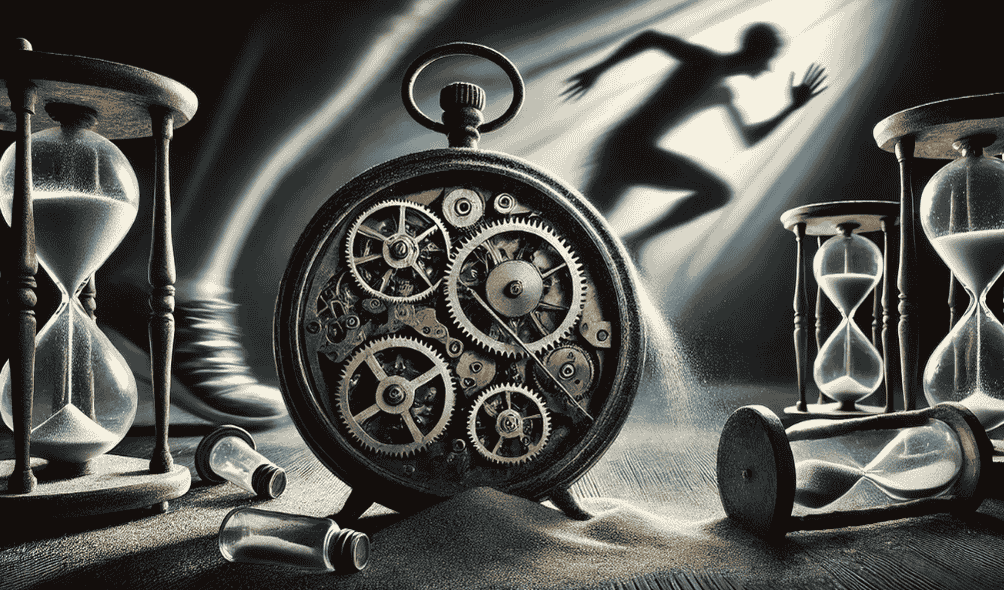
Time is the one thing nobody has enough of, nobody can stop, and everybody wastes at least a little. You can make more money, rebuild relationships, learn new skills, and reinvent yourself, but time? Once it’s gone, it’s gone. That’s probably why language is packed with idioms about time. People have been wrestling with time forever — trying to save it, stretch it, kill it, beat it, and sometimes just survive it.
What’s interesting is that time idioms rarely sound scientific. They’re emotional. They talk about pressure, regret, patience, urgency, and opportunity. Because time isn’t just minutes and hours. It’s deadlines, seasons, aging, waiting, rushing, and realizing too late that you should’ve acted sooner.
These idioms didn’t come from productivity gurus or apps. They came from lived experience. From farmers watching seasons pass. From workers racing daylight. From people realizing that some moments don’t come back.
So let’s walk through 21 idioms about time — slowly, properly, and with enough explanation that they actually stick.
Time Flies
Everyone knows this one, and everyone feels it more the older they get. Time flies when you’re busy, engaged, happy, or distracted. One moment it’s Monday morning, and suddenly it’s Friday night wondering what happened to the week.
What makes this idiom powerful is how universal it is. Nobody argues with it. Kids feel it during summer. Adults feel it during years. Parents feel it watching children grow. The phrase captures that strange emotional truth that the more meaningful or full life becomes, the faster time seems to move.
It’s also a quiet reminder to pay attention. If time flies, moments matter. And if you’re not careful, you’ll look back wondering where whole chunks of your life went.
Meaning: Time seems to pass quickly
Example: Time flies when you’re having fun.
Origin: Latin proverb
Synonyms: Time passes quickly
How to Use: Use when surprised by how fast time passed
Beat the Clock
This idiom is pure pressure. It’s about racing time and winning — barely. Whether it’s finishing a task before a deadline or making it somewhere just in time, beating the clock means you didn’t have a second to spare.
What makes this phrase relatable is how modern life feels like one long race against the clock. Deadlines. Timers. Notifications. Countdowns. The clock is always ticking, and sometimes success simply means you didn’t run out of time.
There’s also pride baked into it. You didn’t just finish. You made it.
Meaning: Finish before time runs out
Example: She beat the clock and submitted on time.
Origin: Timed competitions
Synonyms: Make it in time
How to Use: Use for deadline pressure
Around the Clock
This idiom describes nonstop effort. No breaks. No pauses. Just continuous action.
It’s often used to praise dedication, but there’s also an edge to it. Working around the clock sounds impressive, but it also hints at exhaustion. It reminds us that time doesn’t stop just because we’re tired.
Meaning: Continuously, day and night
Example: They worked around the clock.
Origin: 24-hour clocks
Synonyms: Nonstop
How to Use: Use for continuous effort
In the Nick of Time
This idiom is about timing so tight it almost didn’t happen. You arrived just before disaster. Just before the door closed. Just before things went wrong.
The phrase works because it captures relief. That deep exhale when you realize you made it — barely. It also reinforces how thin the line between success and failure can be.
Meaning: Just in time
Example: He arrived in the nick of time.
Origin: Old timekeeping marks
Synonyms: Just barely
How to Use: Use for last-second success
Time Is Money
This idiom reflects a mindset more than a schedule. It tells you that wasting time is costly, whether or not money is involved. Effort, attention, and opportunity all have value.
In modern life, this phrase drives productivity culture. Sometimes helpfully. Sometimes to excess. But the core truth remains: time spent is time gone.
Meaning: Time has value
Example: Let’s be efficient — time is money.
Origin: Benjamin Franklin
Synonyms: Efficiency matters
How to Use: Use to stress productivity
Ahead of Time
Being ahead of time isn’t just punctuality. It’s preparedness. It means you planned well enough that pressure didn’t catch you off guard.
This idiom rewards foresight. Life is easier when you’re early — less stress, more options, better decisions.
Meaning: Early or in advance
Example: She finished ahead of time.
Origin: Scheduling language
Synonyms: Early
How to Use: Use for preparedness
Behind the Times
This idiom stings a little. It’s used when someone hasn’t kept up with changes — technology, ideas, trends, or attitudes.
What makes it powerful is that time doesn’t wait. Staying still eventually means falling behind.
Meaning: Outdated
Example: That idea is behind the times.
Origin: Social progress
Synonyms: Old-fashioned
How to Use: Use for outdated thinking
Kill Time
This idiom sounds violent but means boredom. Waiting. Filling empty hours with distractions.
It captures that uncomfortable space where time drags instead of flies.
Meaning: Pass time aimlessly
Example: We killed time at the café.
Origin: Idle waiting
Synonyms: Pass time
How to Use: Use when waiting
Make Time
Making time isn’t about finding extra hours. It’s about choosing priorities. This idiom quietly admits that if something matters, you’ll adjust.
It’s honest. Time doesn’t appear. It gets allocated.
Meaning: Prioritize time
Example: I’ll make time for you.
Origin: Modern scheduling
Synonyms: Prioritize
How to Use: Use for commitment
Time Will Tell
This idiom teaches patience. Not everything reveals itself immediately. Outcomes need time to unfold.
It’s comforting because it removes pressure to know everything now.
Meaning: The future will reveal the truth
Example: Time will tell if it works.
Origin: Ancient wisdom
Synonyms: Wait and see
How to Use: Use for uncertainty
A Matter of Time
This phrase suggests inevitability. Something is going to happen — it’s just not here yet.
It’s calm, confident, and often slightly ominous.
Meaning: Something inevitable
Example: It’s a matter of time.
Origin: Predictive language
Synonyms: Inevitable
How to Use: Use for certainty
Time on Your Hands
This idiom describes having nothing urgent to do. Sometimes relaxing. Sometimes frustrating.
It highlights how time feels different depending on circumstance.
Meaning: Free time
Example: I had time on my hands.
Origin: Idle periods
Synonyms: Free time
How to Use: Use for availability
Against the Clock
Similar to beating the clock, but more stressful. It emphasizes urgency and pressure rather than success.
Meaning: Racing time
Example: We’re working against the clock.
Origin: Timed labor
Synonyms: Under pressure
How to Use: Use for urgency
At the Eleventh Hour
This idiom describes last-minute action. It’s dramatic, risky, and often criticized.
Waiting until the final moment can work — but it’s not a strategy.
Meaning: Very late
Example: He decided at the eleventh hour.
Origin: Biblical reference
Synonyms: Last minute
How to Use: Use for delay
Time After Time
Repetition is the heart of this idiom. It describes patterns that repeat again and again.
It’s often used with frustration or affection.
Meaning: Repeatedly
Example: She helps me time after time.
Origin: Repetition emphasis
Synonyms: Again and again
How to Use: Use for consistency
From Time to Time
This idiom softens frequency. Not often. Not never. Just occasionally.
It’s flexible and gentle.
Meaning: Occasionally
Example: We talk from time to time.
Origin: Casual timing
Synonyms: Occasionally
How to Use: Use for irregular events
Out of Time
This idiom feels final. Deadlines missed. Opportunities gone.
It carries weight because it implies no extension.
Meaning: No time left
Example: We’re out of time.
Origin: Performance timing
Synonyms: Too late
How to Use: Use for finality
Time Stands Still
This idiom captures emotional intensity. Shock. Awe. Love. Fear.
Moments so powerful they feel frozen.
Meaning: Time seems frozen
Example: Time stood still.
Origin: Emotional perception
Synonyms: Frozen moment
How to Use: Use for intense moments
Once Upon a Time
This phrase opens stories, memories, and nostalgia.
It signals distance from the present.
Meaning: Long ago
Example: Once upon a time, I lived there.
Origin: Storytelling tradition
Synonyms: Long ago
How to Use: Use for past narratives
Time and Again
Similar to time after time, but stronger. Often used for mistakes or repeated failures.
Meaning: Repeatedly
Example: He made the same mistake time and again.
Origin: Emphatic repetition
Synonyms: Over and over
How to Use: Use for repetition
Better Late Than Never
We end on grace. This idiom forgives delay and values effort over perfection.
It reminds us that showing up late still beats not showing up at all.
Meaning: Late is better than not at all
Example: He apologized — better late than never.
Origin: Ancient proverb
Synonyms: Eventually is okay
How to Use: Use for delayed action
Final Thoughts
Time doesn’t slow down. But understanding how we talk about it helps us understand how we live with it.
Language remembers what clocks can’t.
Related posts:
 Frozen Wisdom: 15 Powerful Winter and Snow Idioms That Explain Life Better Than a Weather App
 Written in the Stars: 17 Powerful Star Idioms That Explain Luck, Dreams, and Human Delusion
 15 Powerful Sports Idioms That Teach Life, Grit, and How to Win Without Cheating
 15 Powerful Travel Idioms That Turn Life Into One Long, Unforgettable Journey